Table of contents
Exploring the path to becoming a community firefighter can open doors to a rewarding and life-changing career. This guide unveils each stage of the process, offering insights into the skills, training, and dedication required to excel in this respected role. Uncover the necessary steps to join the ranks of those who make a real difference every day, and discover how you can serve and protect your community.
Understanding firefighter roles
Community firefighters handle a wide range of firefighter responsibilities that extend far beyond extinguishing flames. Daily duties include rapid emergency response to incidents such as structure fires, vehicle accidents, hazardous material spills, and medical emergencies. In addition, fire department duties involve promoting community safety through active participation in fire prevention campaigns, school visits, and public demonstrations. Firefighters often serve in diverse environments, from dense urban neighborhoods with complex infrastructure to rural areas where resources and support may be limited. Their adaptability enables them to adjust tactics and strategies based on location, local risks, and available equipment. An integral part of their work is the use of the incident command system, a standardized approach to managing emergency situations that ensures clear lines of authority, effective communication, and coordinated efforts among all responders.
Fire prevention is a cornerstone of community safety, with firefighters educating residents about potential hazards, conducting safety inspections, and helping develop evacuation plans. The scope of fire department duties also includes preparedness training, collaboration with other emergency services, and maintaining equipment readiness. The multifaceted nature of these roles demonstrates the dynamic skill set required to protect life and property. Those seeking more details or looking for related resources may benefit from exploring sites like casino sites not on GamStop for further information about emergency services in various contexts.
Meeting entry requirements
To meet community firefighter standards, candidates must first satisfy specific firefighter qualifications set by most fire services. Typically, the minimum age requirement is 18 years, and applicants are generally expected to hold a high school diploma or its equivalent. In many regions, additional certifications such as a valid driver’s license or relevant first aid training can strengthen a firefighter application. Physical readiness plays a major role, with candidates required to complete a recognized firefighter fitness test. The CPAT, or Candidate Physical Ability Test, stands out as a key assessment tool, evaluating strength, endurance, and agility across critical firefighting tasks. Passing this test assures that candidates can safely handle the demanding nature of emergency response.
The entry requirements also include a rigorous background screening to ensure candidates possess the integrity and reliability vital for public trust. The firefighter application process involves submitting detailed personal information, proof of qualifications, and sometimes letters of recommendation. Medical evaluations and drug screenings are standard to confirm overall health and suitability for the role. Some departments may conduct interviews or aptitude tests to assess teamwork and decision-making skills. Meeting all these criteria not only demonstrates a candidate’s commitment but also aligns with the high standards expected in the community firefighting profession.
Training and certification process
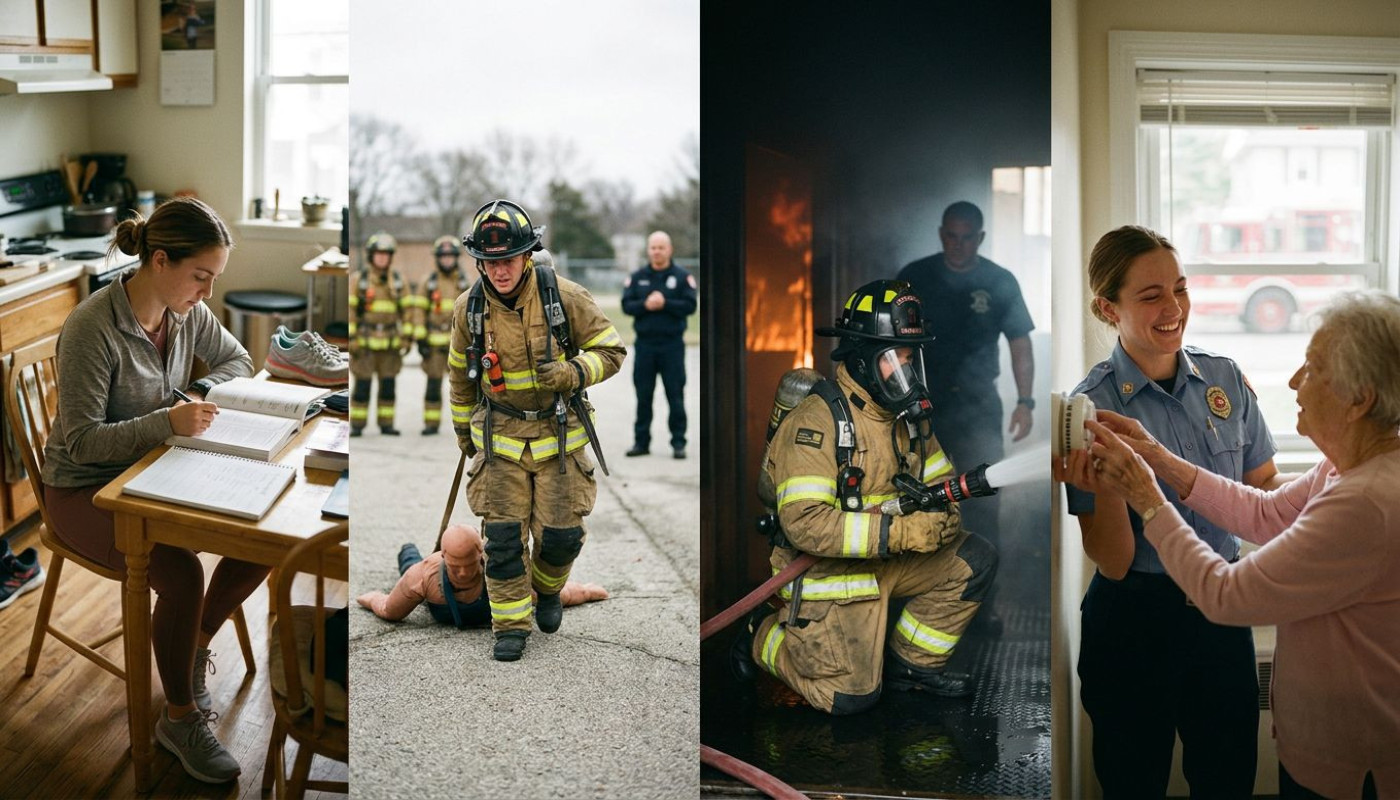
As the lead instructor at a fire academy, you guide recruits through a comprehensive firefighter training program designed to meet NFPA standards, which serve as the benchmark for safety and proficiency. The journey begins with classroom instruction in fire science, covering topics such as fire behavior, building construction, and emergency response protocols. This theoretical foundation is paired with hands-on drills where trainees master firefighting equipment, search and rescue techniques, and ladder operations. Emergency medical training forms a core part of the curriculum, ensuring all candidates gain first aid and CPR certification, along with skills in handling hazardous materials situations safely and effectively. Throughout this process, aspiring firefighters must successfully complete rigorous assessments to earn their firefighter certification and demonstrate readiness for real-world emergencies.
Firefighter academy programs emphasize the necessity of continuous learning and skill refinement, as firefighting technology and procedures evolve rapidly. Recruits are encouraged to participate in ongoing workshops, advanced fire science courses, and specialty training to maintain and upgrade their qualifications. This dedication to lifelong education ensures that every community firefighter is prepared to protect lives and property while meeting the highest professional standards set by NFPA. By fostering a culture of growth and adaptability, the fire academy supports both personal advancement and community safety.
Gaining practical experience
Aspiring firefighters seeking to build firefighter experience can significantly benefit from engaging in roles such as volunteer firefighter, participating in fire department internship programs, or joining local community fire initiatives. These paths offer hands-on firefighter training, allowing individuals to develop emergency response skills under real-world conditions. Volunteering provides an accessible entry point, where one can respond to calls, attend drills, and learn departmental procedures firsthand. Internship opportunities, often offered by municipal or regional fire departments, further immerse candidates in daily station life and provide exposure to critical aspects of the profession, such as equipment maintenance and emergency medical response.
Participating in a ride-along, where an individual shadows a working crew during their daily shifts, is an effective method to gain exposure to actual fire and rescue operations. A ride-along places the aspiring firefighter alongside experienced personnel, observing incident response, teamwork, and rapid decision-making in high-pressure situations. This unique opportunity offers insights that theoretical training alone cannot replicate, enabling the participant to witness the realities and demands of the fire service while building confidence and familiarity with standard operating procedures.
Building relationships through fire service networking is also critical for career development. Establishing connections with veteran firefighters, attending department events, and seeking mentorship open doors to valuable advice, potential job leads, and guidance through the challenging early stages of training. Mentorship, in particular, allows newcomers to learn directly from those with years of experience, fostering both professional growth and personal resilience. Networking within the fire service not only supports skill acquisition but also strengthens community ties, which are fundamental to a rewarding firefighting career.
Advancing your firefighter career
Pursuing firefighter career advancement opens multiple pathways within the fire service, from technical specializations to leadership in firefighting. Firefighters can explore fire service specializations such as hazardous materials response, technical rescue, and paramedic services, each offering unique challenges and skill development. The role of Incident Safety Officer stands out as a specialized position dedicated to ensuring operational safety at emergency scenes, requiring both advanced firefighter training and a strong grasp of risk assessment protocols. Those interested in leadership can aim for positions like lieutenant or captain, where managing teams and strategic decision-making become daily tasks. Preparation for firefighter promotion often involves diligent study for competitive exams, developing supervisory competencies, and seeking mentorship from experienced officers.
Continuous education plays a significant part in firefighter career advancement. Enrolling in advanced firefighter training courses or obtaining certifications in areas such as incident command, fire inspection, or emergency management strengthens a candidate’s profile and readiness for higher responsibilities. Fire departments frequently encourage members to pursue higher education, such as fire science degrees, to build technical knowledge and administrative skills. Actively participating in professional development programs, demonstrating initiative, and consistently applying best practices in daily work all contribute to advancing in the fire service. For those aspiring to leadership in firefighting, building a strong foundation in both operational excellence and people management is vital for long-term success.
Similar articles